
Yunnan is China’s wild card, and here’s why that’s a good thing
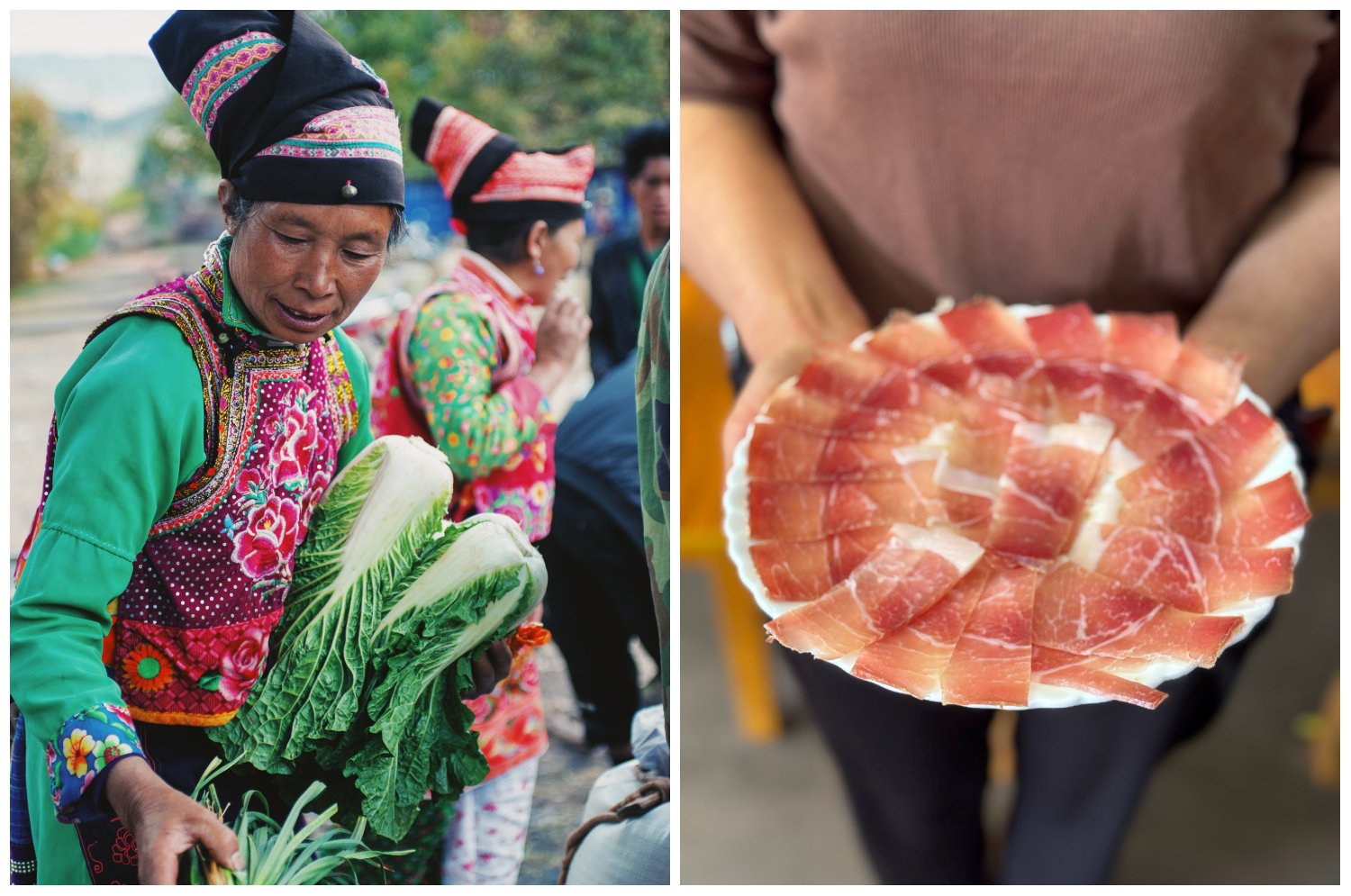
An Yi minority lady at the market, and Nuodeng ham
When I say “I’m going to Yunnan”, even super well-travelled people look quizzical. “Where’s that?” they ask, and fair enough, too. After all, when people think of China, their minds instantly click to the Greatest Sino Hits… adorable pandas, the Great Wall, the Terracotta Warriors, The Bund, the Summer Palace, the Forbidden City, and maybe even Disneyland in Shanghai. Then there are all those clichés around high tech and bright lights… the endless QR codes… the bullet trains… cityscapes crammed with glistening super-structures… robot-staffed factories…
But what if there were corners that are slower, softer, greener and less expected? Tucked into the far southwest corner of the People’s Republic, nudging the borders of Myanmar, Tibet, Vietnam and Laos, lies Yunnan and it’s all of those things… and more. From the moment I first set foot there some 15 years ago, and tasted the noodles, tofu and steamed chicken of my life, I fell for it hard.
Larger than Germany, Yunnan is China, but different. For a start, it has 25 officially recognised ethnic minorities, which comprise around a third of the province’s population. These include the Yi, Bai, Hani, Miao, Zhuang and Naxi and many of these groups have distinct dress, language, culture and even architecture. 15 of the ethnic minorities are only found in Yunnan. Then there’s the geographic diversity of the place; from the towering mountains of the north, where the culture is largely Tibetan, to the tropical rainforests and humid fug of the south, where the vibe (and food) feels distinctly Southeast Asian, this place has it all.
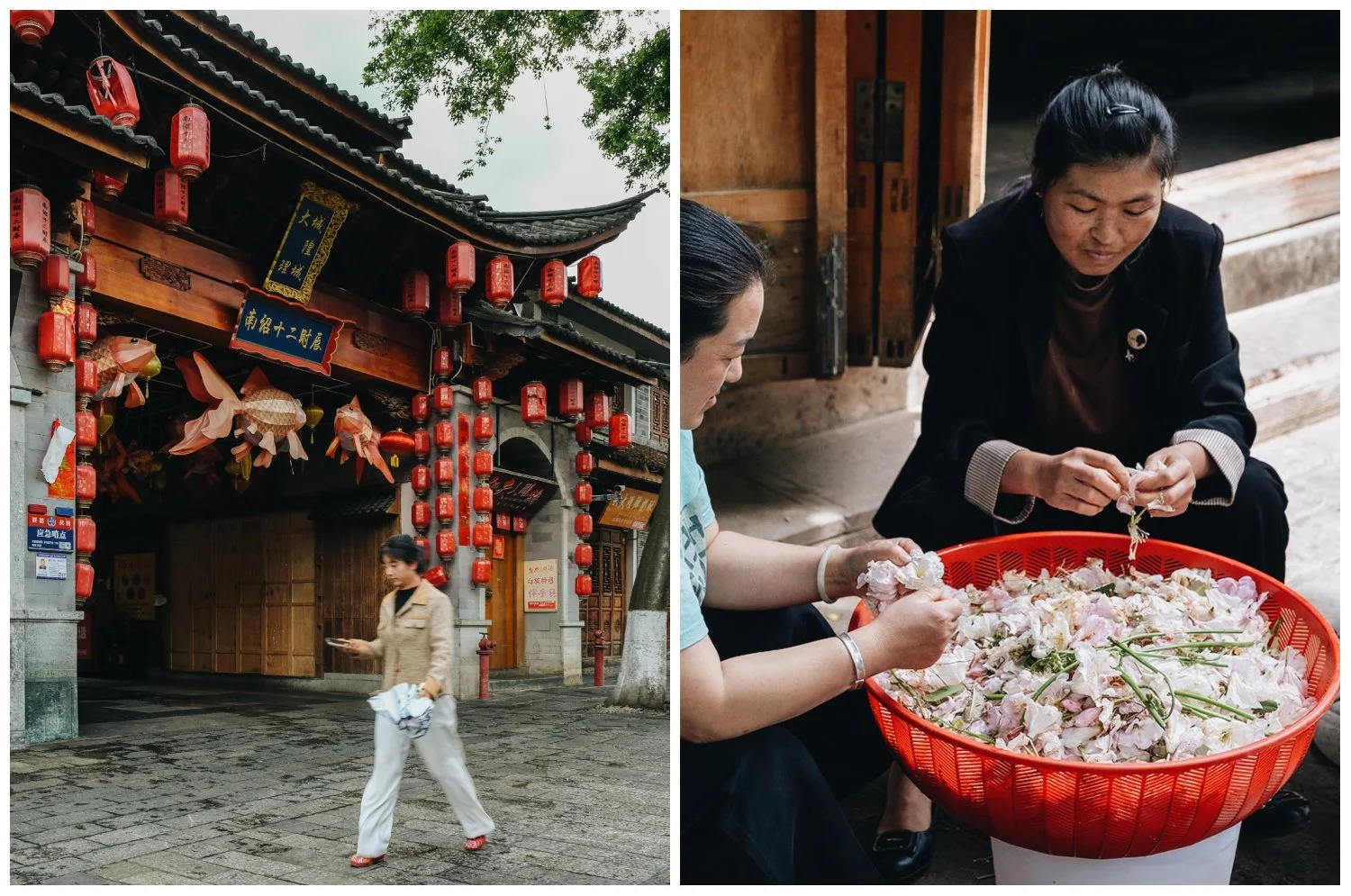
Dali Old Town and sorting edible blooms in Shaxi
Yunnan boasts a stunning biodiversity too. It’s home to animals and plants found nowhere else on the planet, and on its own represents a significant portion of China’s total plant diversity. This equates to some pretty exciting cooking ingredients, notably over 600 varieties of edible mushrooms (let that sink in!), including Boletus edulis (aka porcini), matsutake, morels, chanterelles, wood ear and more. A whole range of edible flowers and aquatic vegetables are used across a variety of dishes, including unopened jasmine buds, Himalayan pear flower buds, azalea petals, rose, and magnolia. Yunnan produces coffee and some world-renowned teas – looking at you, Pu’er. The best of these are picked from trees that are over 1,000 years old! They even make cheese in Yunnan, and distil potent wines from plums, roses and wild fruits. You haven’t lived unless you’ve eaten er’kuai for breakfast in Dali – a chewy, savoury rice disc made from steamed and pounded rice, grilled over hot coals until blistered and smoky, then rolled around a punchy filling of crisp pickled vegetables and a doughy youtiao (fried dough stick). Mmmmm. Market culture and cooking according to seasonal rhythms still run strong, which, thanks to the incredible range of fresh produce, gives rise to regional dishes that are varied, bright and full of surprise.
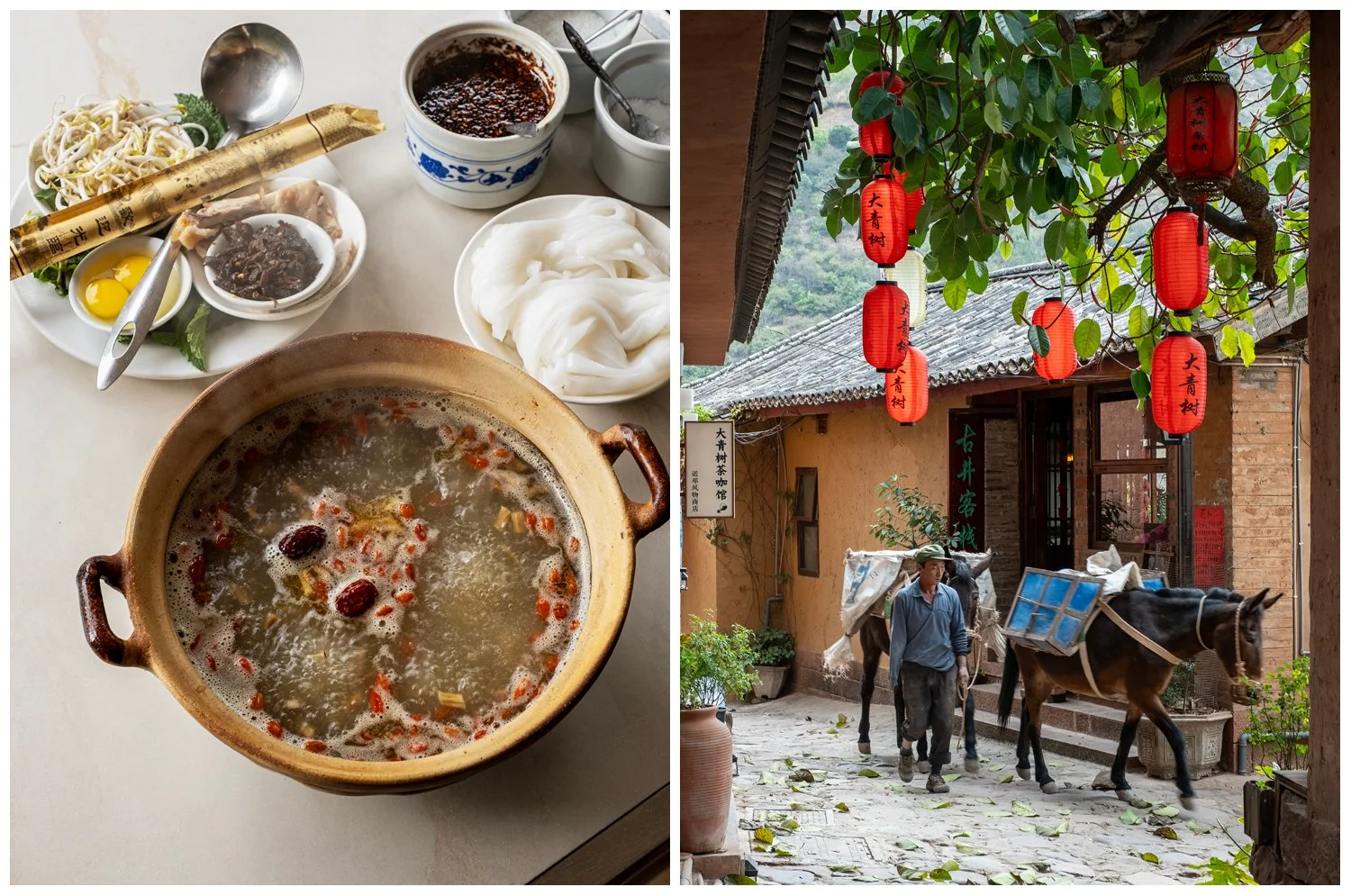
Crossing The Bridge noodles in Jianshui and a Nuodeng street scene
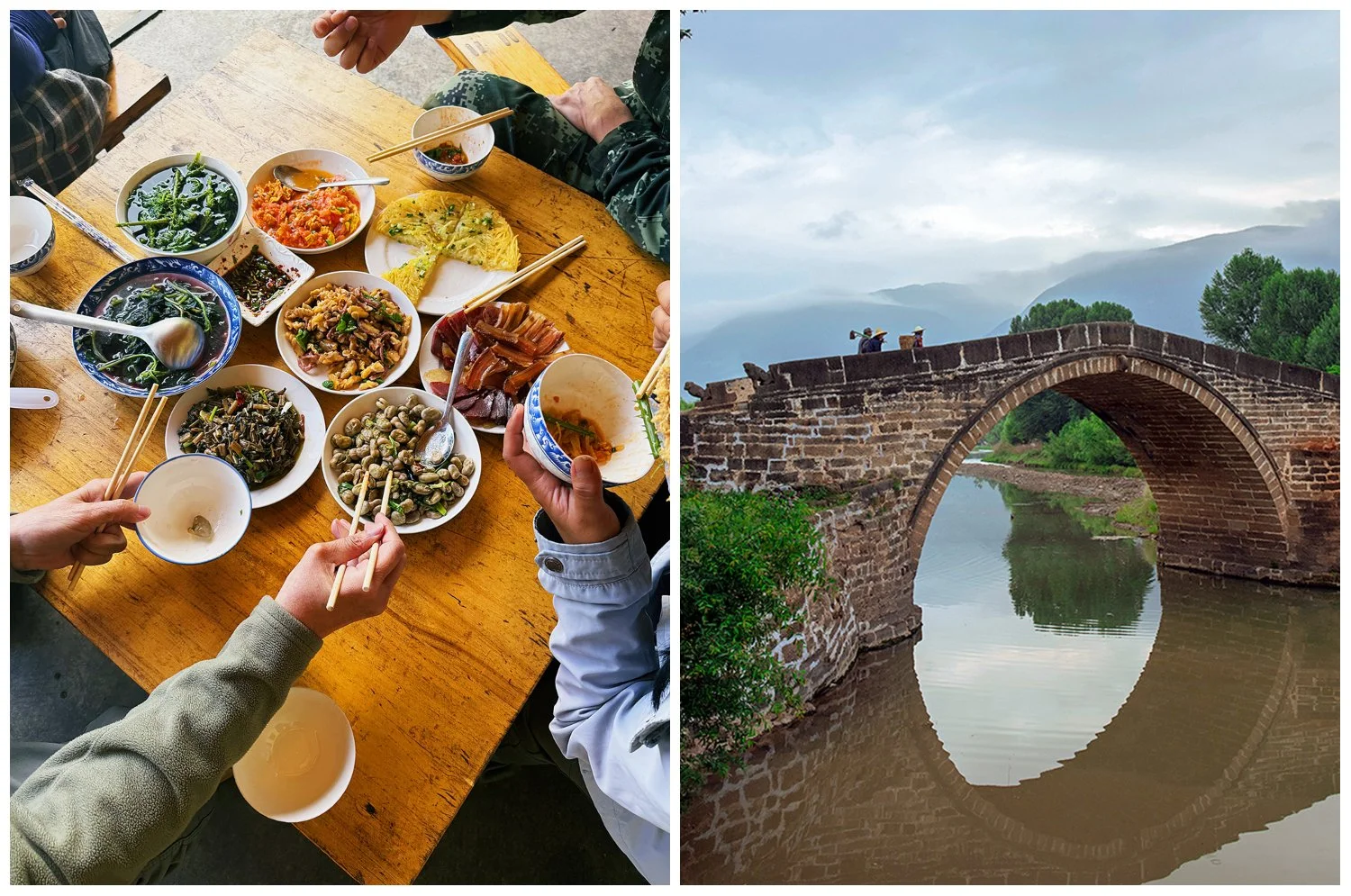
These are just some of the reasons I love Yunnan. There are more. As a lover of China’s older towns and peaceful, dustier corners, I was thrilled to discover ancient towns like Shaxi (once a stop on the famous Tea Horse Road), lovely Weishan (once the capital of the Nanzhao Kingdom, a major historical entity in the region), and Jianshui. Sure, these towns are becoming more commercialised – that’s what happens when new roads and high-speed rail lines go in. A few have even starred in popular Chinese TV dramas, which has supercharged their profile among domestic travellers. Even so, you can still enjoy quiet times and places with just the locals. Time it right and you can sit in the incredible town square in Shaxi, gaze at the 600 year old theatre, look at the stars, and feel all the vibes. You can still enjoy the glorious, slightly decrepit splendour of Tuanshan, a once-wealthy Qing dynasty-era town near Jianshui, without the throngs. And speaking of Jianshui, you can still sit around a rustic, street-side barbecue, throw back baijiu and grilled tofu like there’s no tomorrow, and be the only outsider there. On a recent visit I went with young locals on a food foraging trip, hiking into the mountains near Dali, breathing in the pristine air, and taking in stupendous vistas. Revelling in the smoky aromas of a home-made lunch cooked over coals in an old timbered farmhouse afterwards was unreal. A stir-fry of sweet local walnuts and home-cured ham? Tick. Just-picked broad beans steamed in their shells with fresh dill? Yep. Raw slices of 5 year old home-cured ham? Absolutely. It was bloody magic. The food here connects people to place – a living reflection of Yunnan’s deep sense of seasonality and self-sufficiency. You have to go there to really get it.
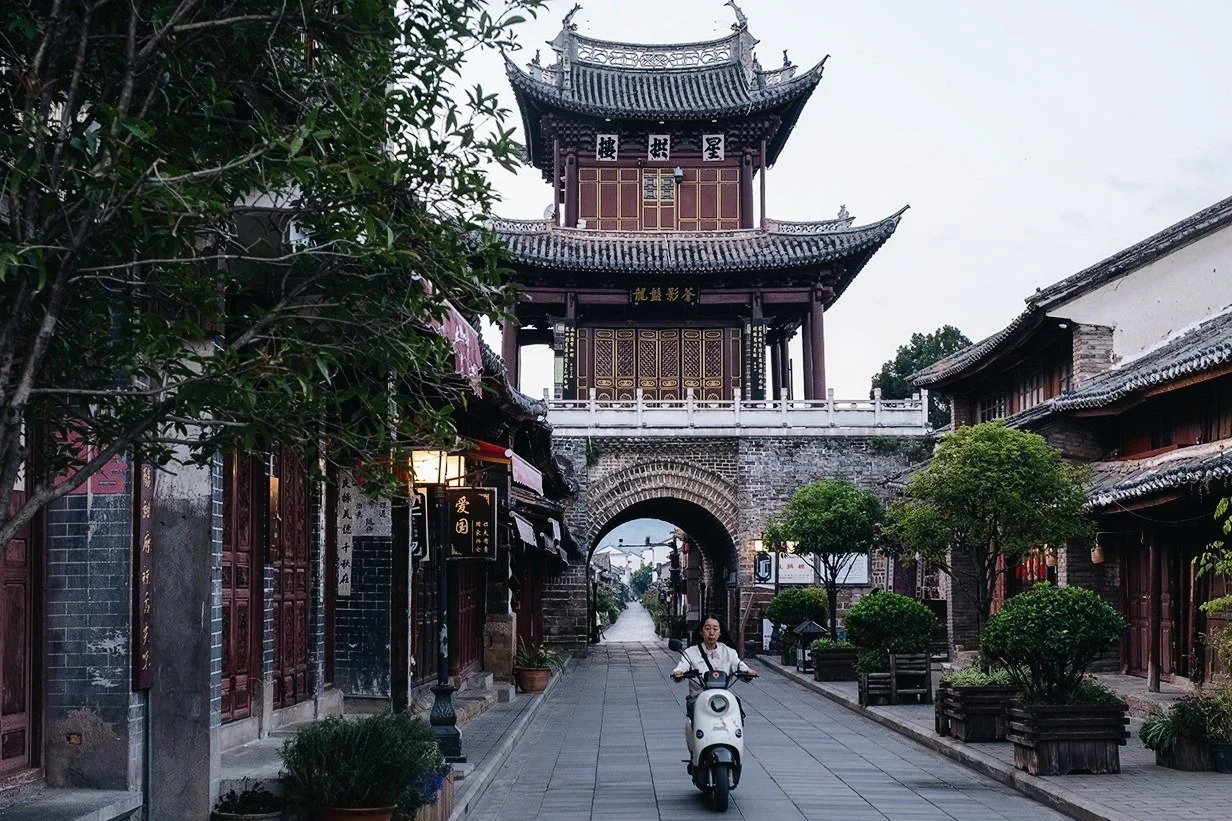
The gorgeous old town of Weishan, near Dali
Which is why I decided to start hosting small group tours to Yunnan; with local experts on the ground providing guiding, transport and logistical assistance, I take foodies on a journey into central Yunnan. We start in Kunming, dip down to Jianshui (my new favourite place), move on up to Dali, and discover towns, villages and markets as we go. This isn’t a sweep through the whole province (it’s the size of Germany, remember?)… I’m not into rushing things. Maybe we’ll expand into other parts of Yunnan in the future, but in the meantime I’m designing an itinerary for Sichuan, another gorgeous part of the world, and one of my favourite Chinese provinces. Follow the adventure (find Elsewhere&Beyond on Facebook and Insta), or even better, come with me next year and fall in love with Yunnan too!
Keen to see Yunnan for yourself? We’ve curated an extraordinary 15-day journey through Yunnan for September 2027, exploring its landscapes, food, villages and cultures. See the itinerary here.
