
A Food Guide to HCMC: 12 Essential Dishes, Part 1
If you want to understand Ho Chi Minh City – or any city, for that matter – eat it. While phở and bánh mì have become global shorthand for Viet food, they are only the beginning of what to eat in HCMC; truthfully, the variety can be overwhelming. Southern Vietnam has a food culture of its own, shaped by the abundance of the Mekong Delta, centuries of trade and migration, and the Chinese, Cambodian and French influences that have left their mark. It would take longer than the average trip to eat your way through all of HCMC’s great dishes, but the following, Part One of our two-part guide, offers a delicious introduction to how Ho Chi Minh City eats.
1. Ốc
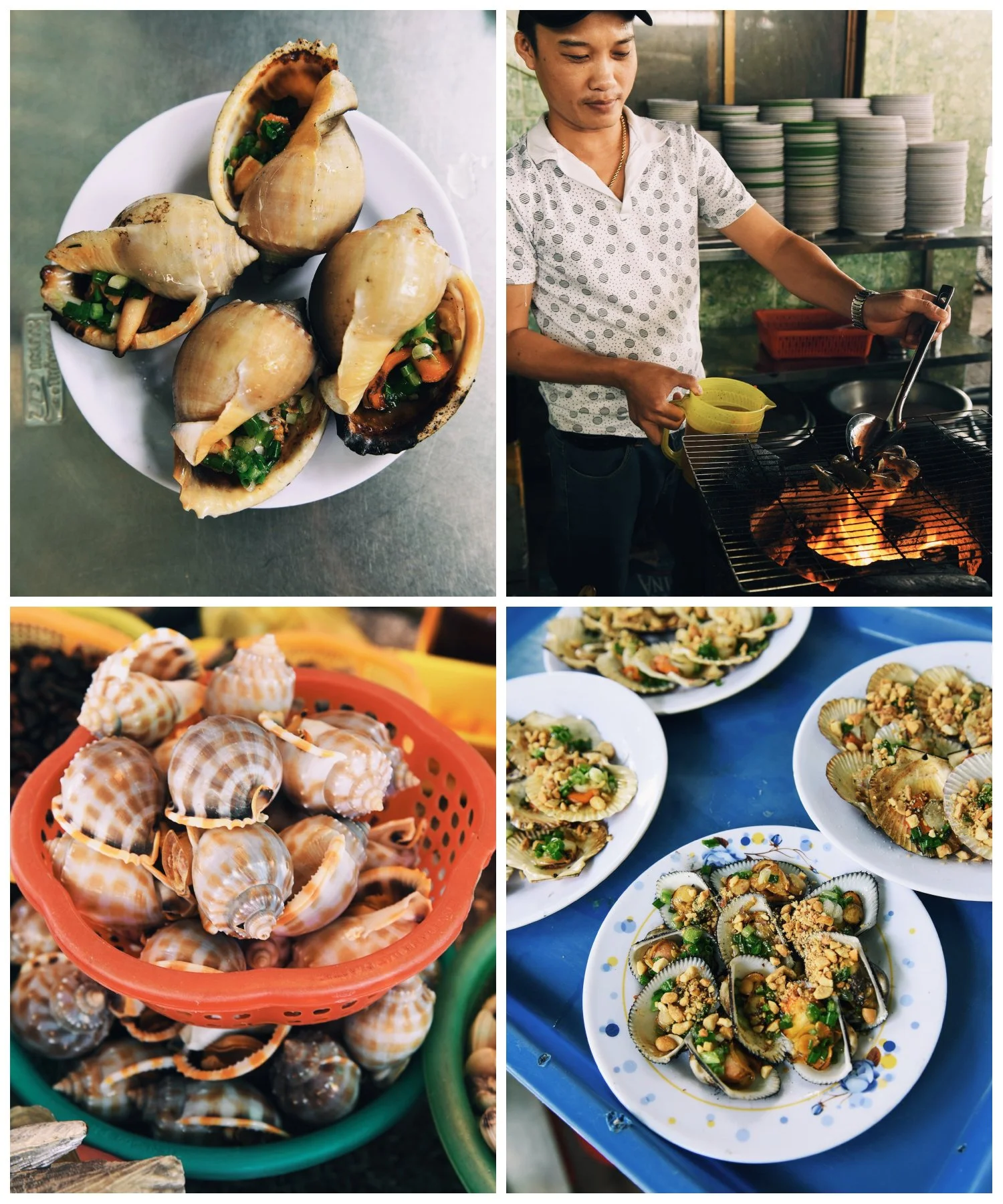
THE DISH – The word ốc encompasses a vast, exuberant array of snails, clams, mussels, oysters, scallops and other shellfish, cooked in an array of ways. Some are chewy, some pleasingly rubbery, others a bit crunchy. Toppings, sauces and flavours are variously garlicky, tamarind-y, chilli-hot, or coconut milk-y. Ốc can be grilled, stir-fried, finished with fried shallots or peanuts, flavoured with lemongrass or glossed with salted egg yolk. Mainly enjoyed in the evening with beer and drinking games, ốc is seafood as a gloriously rowdy social event.
THE STORY – The Mekong Delta provides extraordinary aquatic bounty, and its ốc have long been a food source. But modern Saigon has turned ốc into something much bigger – an entire genre of casual eating. Ốc restaurants are particularly associated with the kind of food culture that flourishes after dark: inexpensive, sociable, noisy and wholly informal.
IN HCMC – District 4 is famous for its ốc restaurants, although the culture extends all through the city.Eating them involves a grazing approach; you sit with friends, choose several plates from the menu and share, picking shells apart with your fingers, or fishing flesh out with a pin, while drinking something cold and refreshing. The sauces are almost as important as the seafood; it’s a cuisine of contrasts and you want to order a variety. Look out for:
Ốc len xào dừa – mud creeper snails in a rich coconut, lemongrass and chilli sauce
Ốc hương rang muối ớt – fragrant sea snails roasted with chilli salt
Ốc mỡ xào me – chewy snails tossed in sweet-sour tamarind sauce
Ốc móng tay xào rau muống – razor clams stir-fried with garlic and morning glory
Sò huyết rang me – blood cockles in a sticky tamarind sauce
Sò điệp nướng mỡ hành – scallops grilled with spring-onion oil and peanuts
WHERE TO EAT –District 4 is the classic destination, particularly the lively Vĩnh Khánh food strip. Ốc Oanh and Ốc Đào 2 are two long-established names worth seeking out, although good ốc is found throughout the city. Go to Vĩnh Khánh in the evening, when the street comes alive with low tables, sizzling pans, beer and the happy chaos of Saigon's ốc culture. The experience is unpretentious, a little raw, and can be wonderfully chaotic.
2. Phở
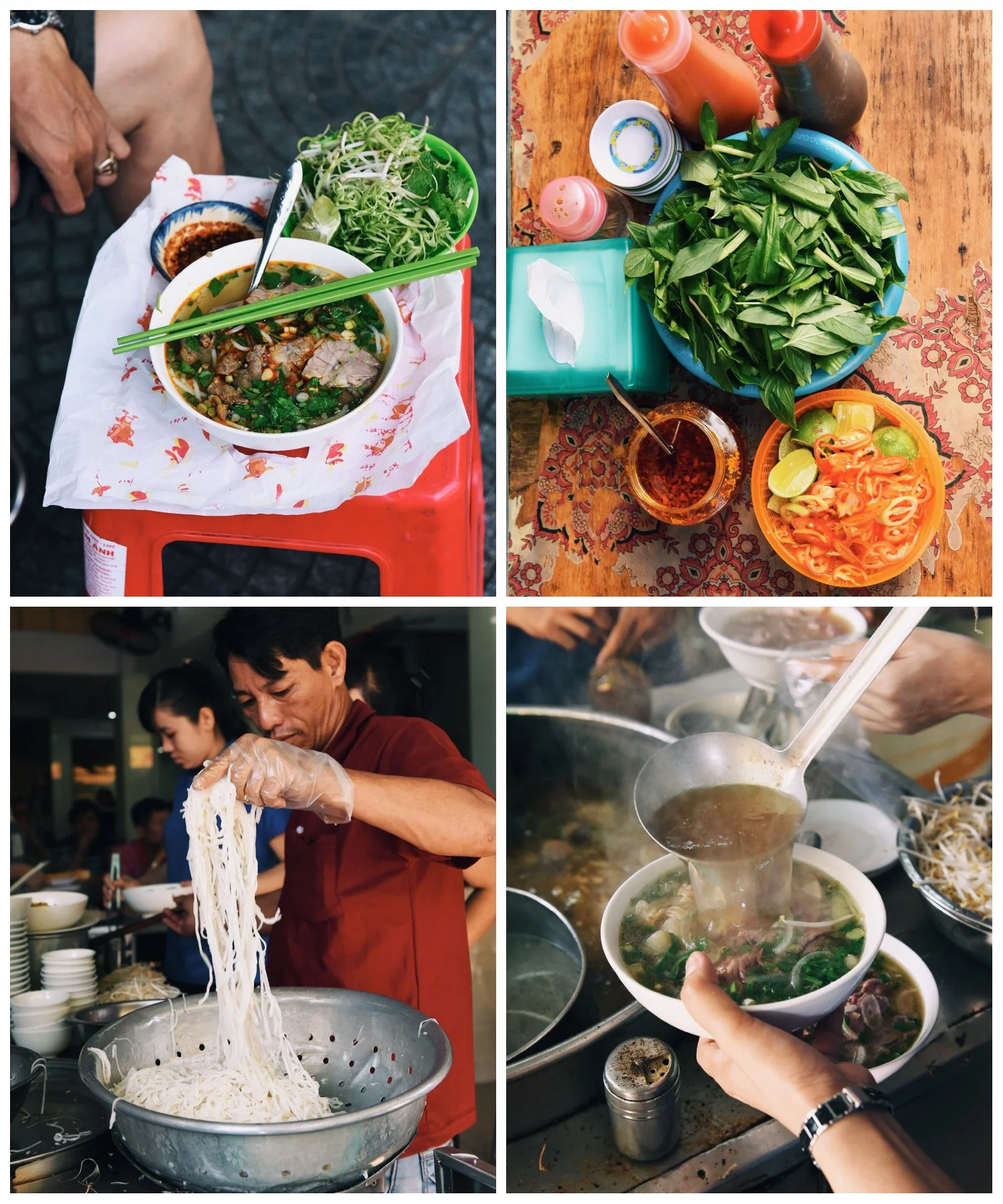
THE DISH – Phở may be Vietnam's most famous dish, but there’s no single version. At its heart, it’s a bowl of rice noodles and aromatic, long-simmered broth, usually beef or chicken, served with herbs and other accompaniments. But the bowl changes as you travel the country, and there aren’t standard recipes either; each shop has its own nuanced variant. One cook might emphasise star anise and cinnamon; another might have a more pronounced gingery character. Some use rock sugar to give sweetness. The bones used, ratio of marrow to meat bones, simmering time, seasoning and even the way the aromatics are toasted can all differ.
THE STORY – Phở emerged in northern Vietnam in the early twentieth century, but as people migrated south, so did their food, and phở developed its own southern character. That difference is one of the fascinating things about eating Vietnamese food. The country's cuisines are not simply regional variations on a national template. Geography, migration, history and local tastes all matter.
IN HCMC – Southern phở tends to be more generously accompanied than northern versions. The table is laden with bean sprouts, herbs (Thai basil, sawtooth coriander, Vietnamese mint, perilla), lime halves, fish sauce and chilli, allowing you to adjust the bowl as you eat. The broth has a sweeter profile than the more restrained northern style and the noodles are a tad wider. For a visitor, this makes phở an interesting introduction to the north-south conversation that runs through Vietnamese food. Look out for:
• Phở gà – chicken phở, fragrant with ginger, onion and Vietnamese herbs
• Phở bò – beef phở, with options including rare beef, brisket, tendon and meatballs
• Phở tái – phở with thin slices of rare beef, cooked gently in the steaming broth
• Phở chín – phở with well-done beef, usually brisket or flank
• Phở bò viên – beef phở with bouncy, peppery beef meatballs
• Phở đặc biệt – a combination bowl loaded with several cuts of beef
• Phở Bắc – northern-style phở with a clear, deeply savoury broth and restrained seasoning
• Phở trộn – dry phở noodles tossed with herbs, meat and a punchy dressing
WHERE TO EAT – Make a point of trying at least one old-school specialist. Phở Minh, dating from 1945, is the classic, tucked down an alley off Pasteur Street; it’s listed in the MICHELIN Guide, although frankly, its longevity is recommendation enough. Arrive early – it closes by around 10.30am. Phở Hòa Pasteur is another long-established Saigon institution and is maybe even more straightforward to find. For something a little less old-school, Phở Hương Bình, also listed in the MICHELIN Guide, is another good option.
3. Rice-paper rolls
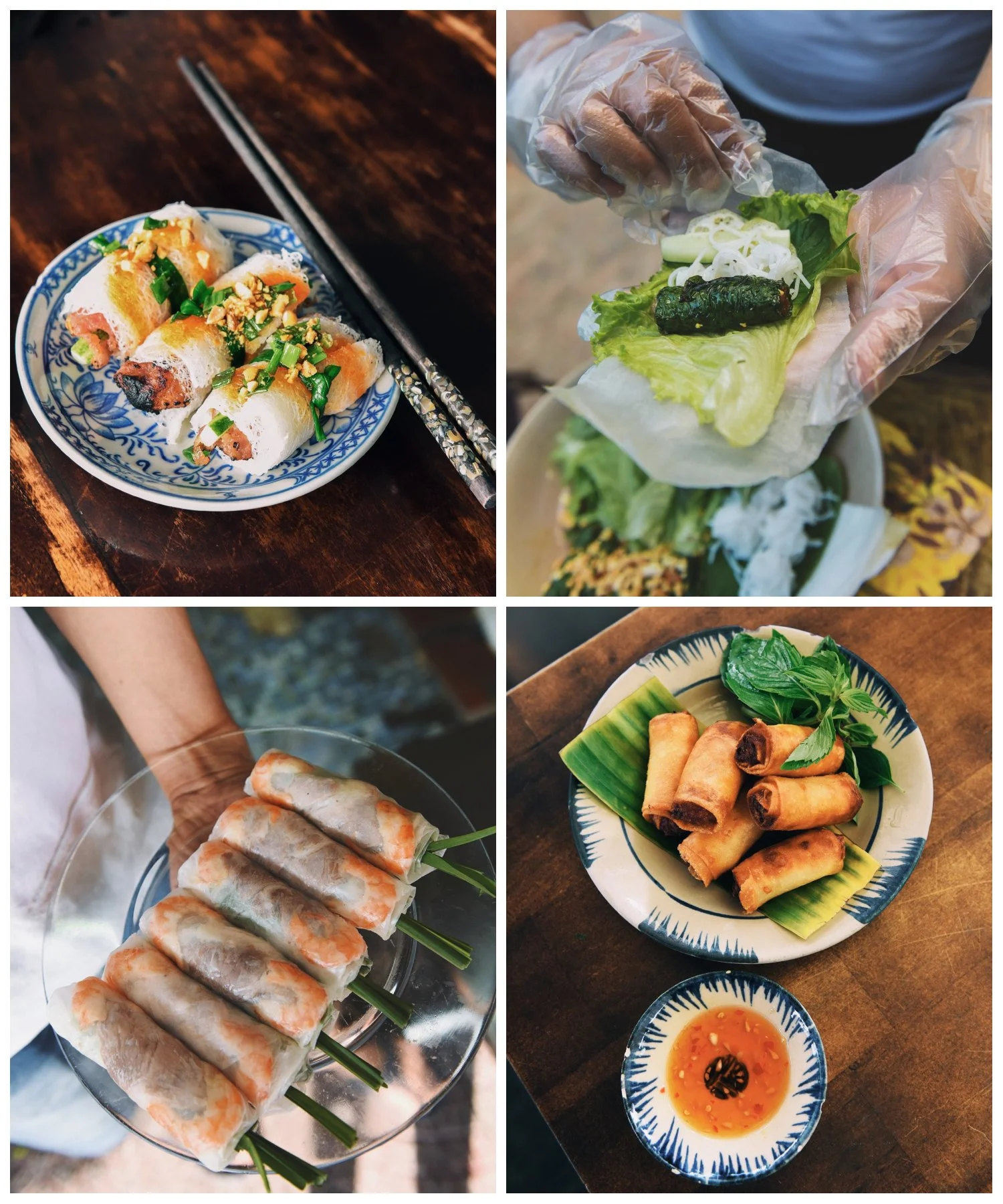
THE DISH – Less a single dish than a whole repertoire of Vietnamese eating, there are the familiar fresh rolls – translucent sheets of bánh tráng wrapped around prawns, pork, rice noodles, lettuce and herbs – but also crisp fried rolls, elaborate roll-your-own feasts and versions made with bánh hỏi (those very fine strands of rice vermicelli woven or pressed into delicate net-like sheets). What goes inside, how they’re rolled and whether they are served fresh or fried varies.
THE STORY – Rice paper has deep roots in Vietnam's rice-growing culture, particularly in the south, where bánh tráng is made in enormous quantities. It is extraordinarily versatile: used for wrapping, dipping, frying and assembling food at the table. The best-known version is probably gỏi cuốn – the fresh summer roll, sometimes rather misleadingly called a “Vietnamese spring roll”.
IN HCMC – Gỏi cuốn are the fresh, translucent rolls most visitors know, usually filled with prawns, pork, vermicelli and herbs. Chả giò are their crisp, fried cousins, with a thin wrapper enclosing a savoury filling and a satisfying crunch. Then there are the wonderfully delicate bánh hỏi – fine, net-like strands of rice vermicelli pressed into intricate woven sheets, often served with grilled meat, pork or prawns, herbs and dipping sauce, but other times rolled around fillings. They aren't technically rice-paper rolls, but they're very much part of this same world of wrapping, rolling and assembling at the table. Look out for:
Món cuốn – the Vietnamese roll-your-own tradition: rice paper arrives with herbs, vegetables, noodles and meat or seafood for you to assemble at the table.
Bánh tráng cuốn thịt heo – pork with rice paper, herbs and vegetables for rolling, particularly associated with Đà Nẵng and central Vietnam.
Bò bảy món / bò cuốn bánh tráng – a selection of beef dishes served with rice paper and herbs for wrapping.
Gỏi cuốn – the familiar fresh summer rolls, already assembled with ingredients such as prawns, pork, vermicelli and herbs.
Chả giò – the crisp fried rolls, usually filled with minced pork, prawns or other savoury ingredients.
Bánh hỏi – impossibly fine rice noodles woven into delicate, lace-like sheets, usually served with grilled meat or seafood, herbs and dipping sauce.
Bánh tráng phơi sương – soft, slightly chewy rice paper from Tây Ninh, often used for wrapping meats, herbs and vegetables with fermented dips.
WHERE TO EAT – Look for restaurants specialising in bánh tráng cuốn or particular regional wrapping dishes rather than restaurants simply offering gỏi cuốn as an appetiser. The best tables can look almost comically abundant when everything arrives – piles of herbs, leaves, noodles, rice paper, pickles, meat or seafood and several sauces.
Don't be afraid to ask how to assemble, either. Watching staff make the first roll is considerably easier than trying to work out what to do with an entire tableful of ingredients yourself.
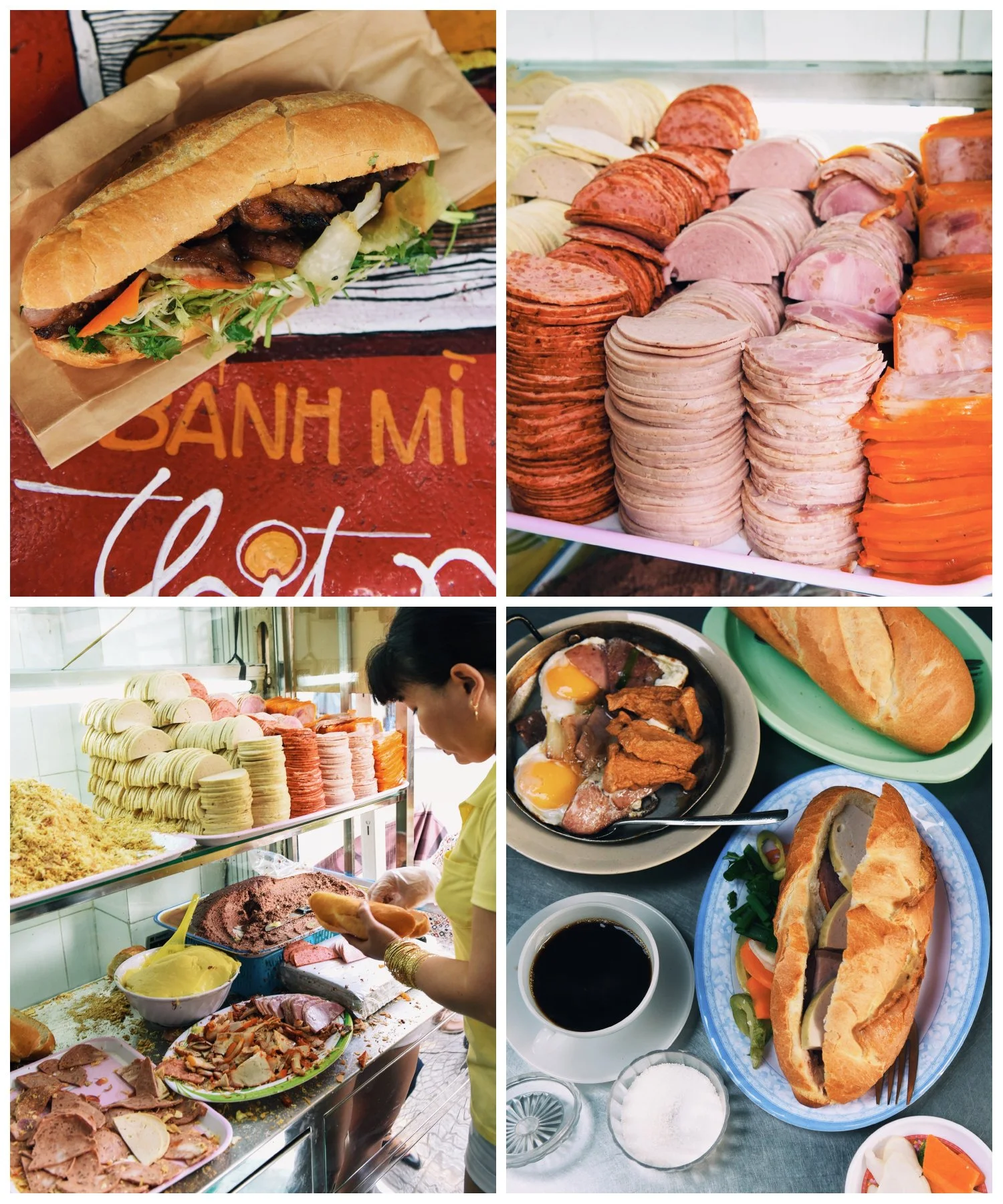
4. Bánh mì
THE DISH – At its simplest, bánh mì is a crisp, feather-light Vietnamese baguette filled with some combination of pâté, cold cuts, grilled pork, meatballs, fried egg, pickles, cucumber, coriander, chilli and a sweet-savoury sauce. The possibilities are almost limitless. The bread is crucial. It should shatter when you bite into it, giving way to an airy interior that doesn't overwhelm the fillings. Then comes the collision of textures: crisp bread, rich meats, crunchy pickle, cool cucumber and fresh herbs, with chilli and sauce (mayo, fish or Maggi seasoning) tying everything together.
THE STORY – The baguette (and pâté) arrived in Vietnam with the French, and what began as an imported ingredient became the basis for one of Vietnam's most distinctive forms of street food. The genius is not simply putting Vietnamese ingredients into French bread. It is the way the whole thing has evolved – the bread itself, the fillings, the pickles, the sauces and the balance of textures.
IN HCMC – Bánh mì changes as you travel through Vietnam. In Hanoi, it tends to be more restrained, often built around good bread, pâté and cold cuts. In HCMC, it becomes more exuberant – xíu mại,(meatballs) xá xíu (roast pork), fried egg and all manner of combinations joining the classic fillings. Huế has its own smaller, punchier style. There are no hard rules, however: bánh mì is gloriously open to interpretation, and every good vendor seems to have their own idea of what makes the perfect sandwich. The sandwich can be packed with cold cuts, pâté, pork, pickled carrot and daikon, cucumber, coriander, chilli and house-made sauces. But there is enormous variation. Some are delicate; others are gloriously overstuffed. Some are eaten for breakfast; others are an anytime snack. Look out for:
Bánh mì thịt – the classic meat-filled version, usually with cold cuts, pâté, pickled carrot and daikon, cucumber, coriander and chilli.
Bánh mì thịt pâté – a particularly rich version loaded with pâté and assorted Vietnamese cold cuts.
Bánh mì xíu mại – bread filled with pork meatballs, usually served with a savoury tomato-based sauce.
Bánh mì heo quay – roast pork bánh mì, with crisp-skinned pork and its fatty, juicy meat.
Bánh mì xá xíu – slices of Vietnamese-style char siu, sweet, savoury and caramelised.
Bánh mì ốp la – fried eggs, sometimes with meat and pâté, served with the baguette for dipping into the runny yolk.
Bánh mì chảo – literally “pan bánh mì”, where the fillings – often eggs, meatballs, pâté, sausage and cold cuts – arrive sizzling in a small pan with the bread on the side.
WHERE TO EAT – For an old-school Saigon experience, Bánh Mì Hòa Mã is hard to beat. Established in 1960, it's particularly famous for bánh mì ốp la – sizzling eggs, meat and pâté served in a small pan with a baguette on the side – as well as its more conventional stuffed sandwiches. Then there's Bánh Mì Huỳnh Hoa, the city's legendary heavyweight, where the baguettes are piled high with an almost absurd quantity of pâté and Vietnamese cold cuts. People queue for it.
For something more traditional, seek out Bánh Mì Bảy Hổ, a long-established family business whose sandwiches are built around good bread, pâté, cold cuts, pickles and herbs. And for a completely different experience, try Bánh Mì 37 Nguyễn Trãi, where the speciality is hot grilled-pork bánh mì, with the meat cooked over charcoal as you wait. Smoky, juicy and best eaten immediately.
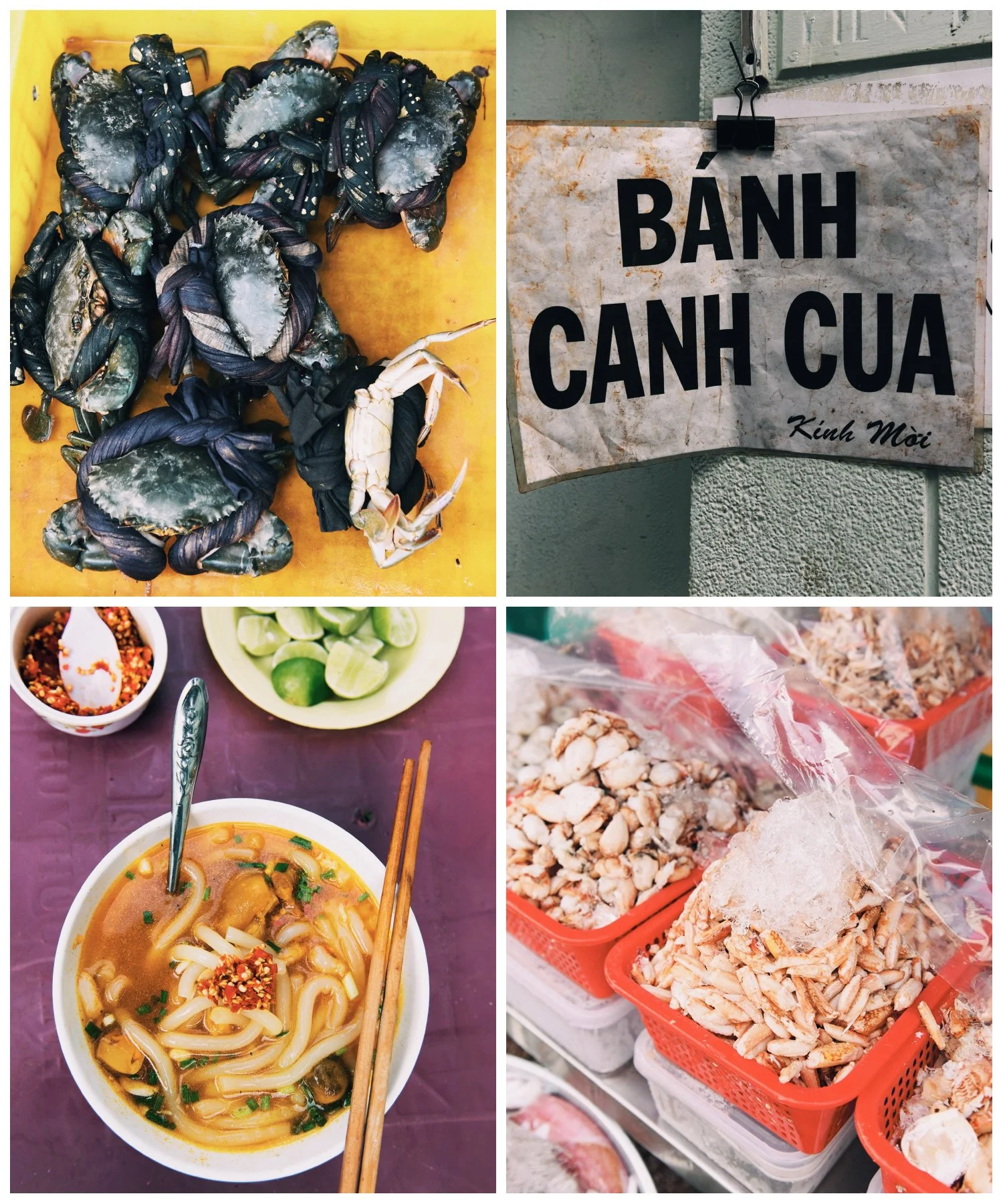
5. Bánh canh cua
THE DISH – Vietnamese crab noodle soup, where the noodles are thick, round and slippery, with a soft, chewy texture somewhere between a noodle and a dumpling. They're made from rice flour, tapioca starch or a combination of the two, which gives their characteristic elastic, bouncy chew. Then comes the broth: it’s rich, savoury and often lightly thickened, with plenty of crab meat, crab roe or crab-infused flavour. A serious bowl might also contain prawns, fish cake, pork, quail eggs, mushrooms and a crab claw or two. It is finished with coriander, spring onion, fried shallots and black pepper.
THE STORY – Bánh canh refers to the noodles, which are used in soups across Vietnam. Different regions have their own versions, and bánh canh cua, the crab version, is particularly associated with southern Vietnam and HCMC, where the noodles are typically served in a rich, savoury crab broth with generous amounts of crab and other toppings. It is a good example of the way Vietnamese food evolves around a basic ingredient: the noodle stays more or less the same, while the broth and toppings change according to local tastes and what's available.
IN HCMC – The broth is thicker than you might expect from a Vietnamese noodle soup; sometimes it’s almost gravy-like and gloopy. Crab meat gives sweetness and depth, while pork stock and seafood add umami. A little chilli, lime and black pepper keep the richness under control. And then there are the toppings, and these can be substantial: prawns, pork, fish cake, mushrooms, quail eggs and sometimes an entire crab claw. The best bowls don't simply pile on ingredients for the sake of it – the sweet crab, chewy noodles and rich broth should be in balance.
WHERE TO EAT – Bánh Canh Cua (Tôn Thất Đạm) is a good option and is currently operating in the mornings. Bánh Canh Cua 14 in District 5 is one of the city's better-known specialists and currently has very strong local ratings. Food-obsessed visitors might like to venture into Chợ Lớn, HSMC’s sprawling Chinatown area, for this dish. Wherever you go, this dish is best treated as a proper meal rather than a quick bowl of noodles, as it’s very filling.
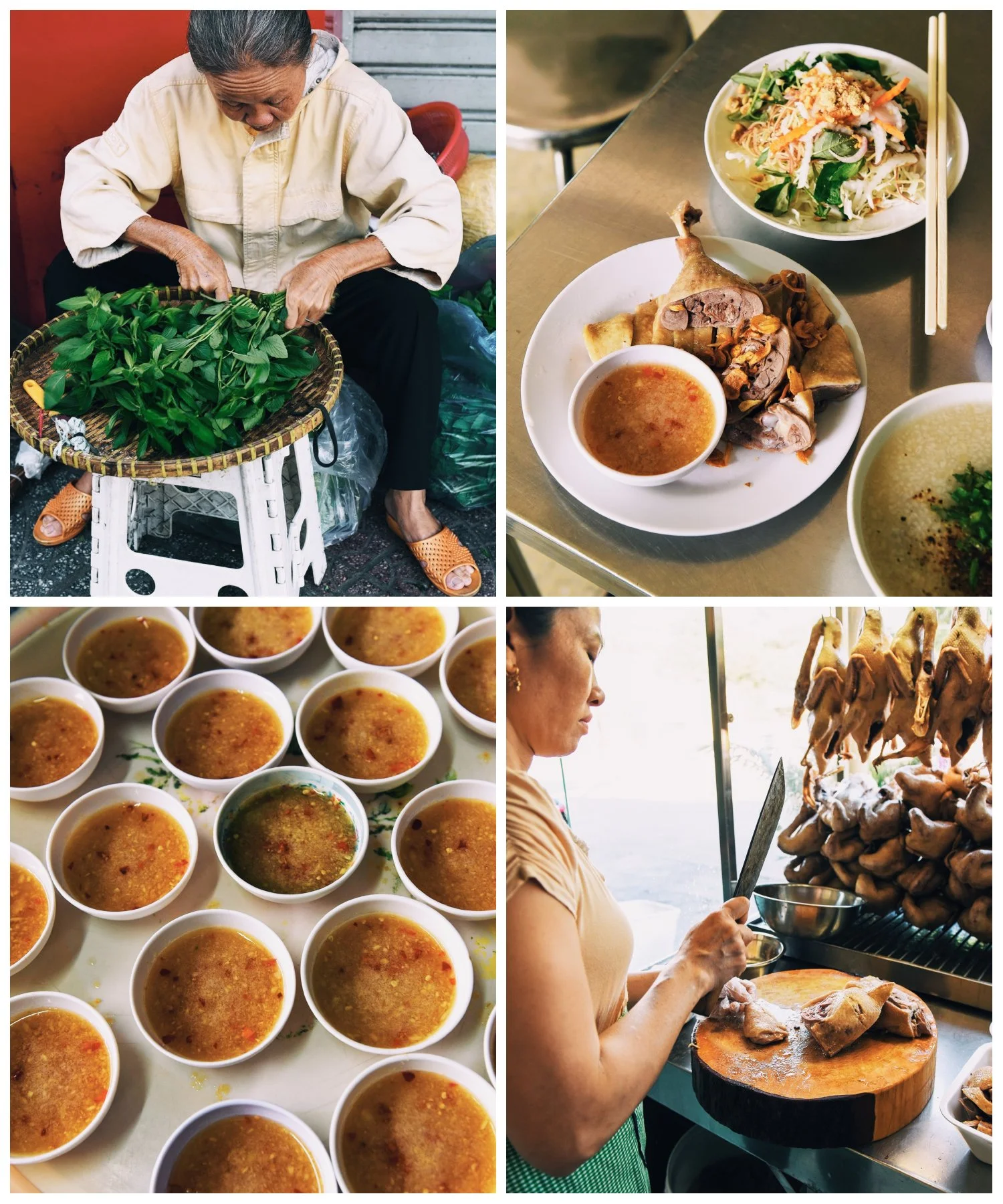
6. Cháo vịt
THE DISH – Cháo vịt is Vietnamese duck porridge; rice is cooked in duck stock until soft and creamy, then served with slices of tender poached duck, usually with a plate of Vietnamese herbs, shredded banana blossom, and salty-sweet nước mắm gừng – fish sauce spiked with ginger, chilli and sometimes lime. The duck is gorgeously soft and yielding. You dip a piece into the sauce before eating it with a spoonful of the warm, soothing cháo, adding herbs to the rice as you go. The contrast is terrific: fresh hits of herb, crunchy banana blossom, and mild, creamy rice against pungent ginger, chilli and salty fish sauce.
THE STORY – Cháo – rice cooked into a porridge – is found throughout Vietnam and has long been associated with comfort, convalescence and everyday eating. Cháo vịt is associated with southern Vietnam, where duck meat is popular. The dish is served as a complete meal, with the duck cooked separately and the poaching liquid becoming the foundation for the cháo.
IN HCMC – Cháo vịt is often accompanied by gỏi vịt – a salad of duck, shredded cabbage, Vietnamese herbs, fried shallots and a sharp dressing. There is also a wonderful textural interplay in the meal, wth the porridge smooth but not completely puréed; the duck tender and slightly chewy; the cabbage and herbs in the salad providing crunch; and the ginger fish sauce cutting through everything . The Thanh Đa area, north of the city centre, has long been associated with cháo vịt; it’s something of a duck-eating destination, with several established restaurants clustered around Bình Quới.
WHERE TO EAT – Head to Quán cháo vịt Thanh Đa (Gốc Nhà Lá) on Bình Quới, a long-established name in the area, known for its cháo, duck and particularly its ginger fish sauce. Song Trang is another duck specialist, also on Bình Quới.
