
A Food Guide to HCMC: 12 Essential Dishes, Part 2
To really get under the skin of Saigon’s food culture, you need to go further than bánh mì and gỏi cuốn– in Part One, we looked at a few dishes that fit this brief. Sich as ốc, or snails. But there are plenty more too; slippery noodles that aren’t phở, rich crab broth, sizzling bánh xèo, sweet bowls of chè and homestyle dishes like pork or fish in caramel that reveal just how diverse southern Vietnamese cooking can be.
7. Bánh xèo
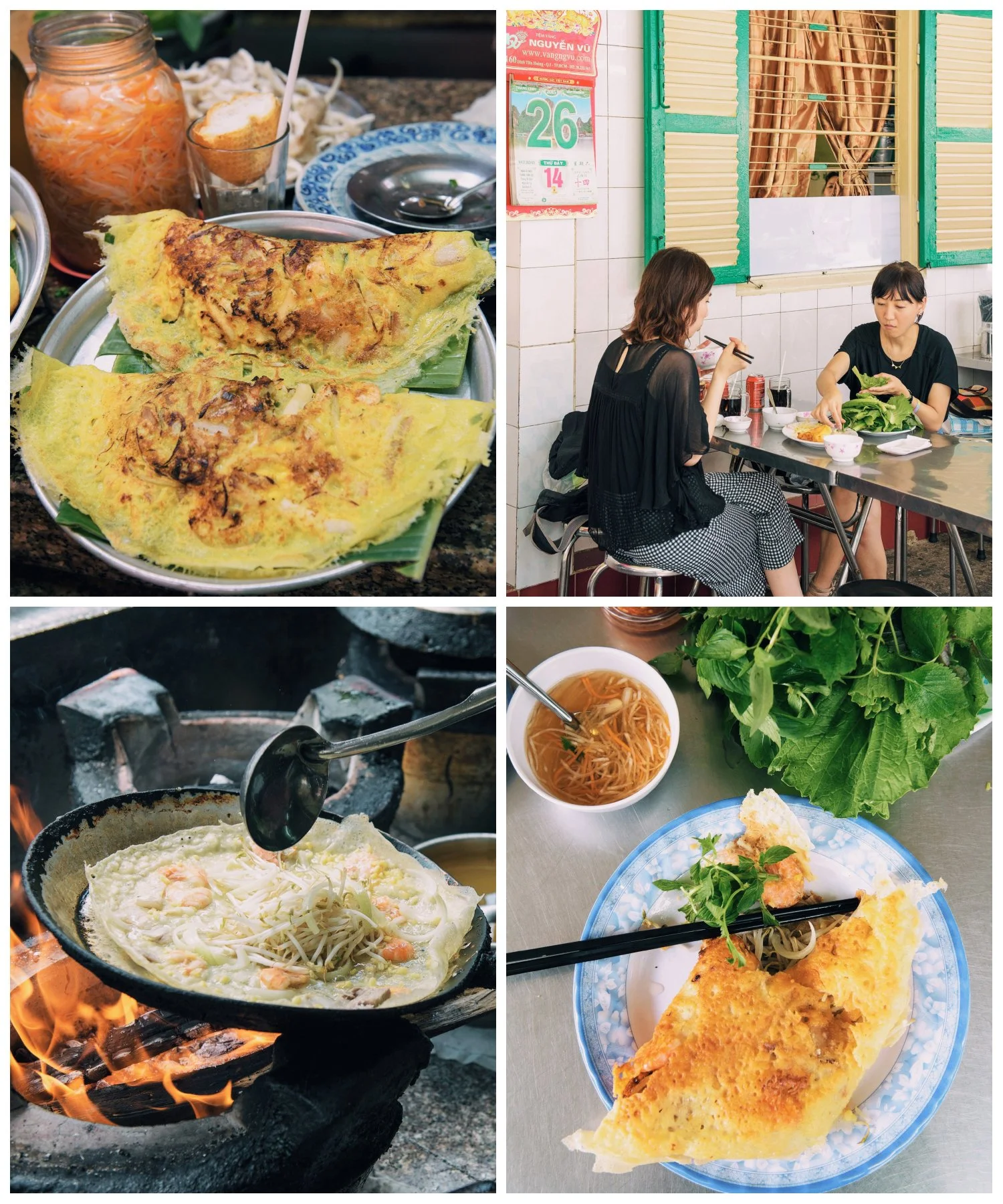
THE DISH – Bánh xèo arrives at the table with a dramatic sizzle: a large, lacy-edged rice-flour pancake, crisp and golden from the hot pan, filled with prawns, pork and bean sprouts.
Its name comes from the sound of the batter hitting the hot pan – xèo is an onomatopoeic word for that satisfying sizzling sound. The batter is traditionally made with rice flour and turmeric, sometimes with coconut milk, and the result should be wonderfully crisp rather than cakey.
THE STORY – Bánh xèo exists in several regional forms, and the differences are striking. The southern version found in HCMC is generally large, thin and exceptionally crisp, reflecting the food traditions of the Mekong Delta and southern Vietnam.
In central Vietnam, particularly around Huế, bánh xèo tends to be much smaller and thicker, often cooked in individual pans. The southern version also makes the most of the region's abundance – rice, prawns, pork, coconut and an extraordinary range of fresh herbs and leaves.
IN HCMC – The pancake itself is only half the experience. Bánh xèo isn't eaten like a Western crêpe. You tear off a piece of the crisp pancake, wrap it in lettuce or mustard leaf with a handful of fresh herbs, and dip the bundle into nước chấm.
And the herbs are essential. Vietnamese mint, perilla, Thai basil and other local herbs bring a remarkable range of aromas and flavours, cutting through the richness of the fried pancake. There's also something wonderfully communal about the ritual: tear, wrap, dip, eat – then do it all over again.
WHERE TO EAT IT – Seek out a restaurant specialising in bánh xèo rather than somewhere that happens to have it on the menu. Look for somewhere where the pancakes are cooked to order and arrive genuinely crisp, with a generous pile of herbs, lettuce and leaves alongside. And eat immediately. Bánh xèo waits for nobody – that shattering crispness is fleeting.
8.Cơm tấm
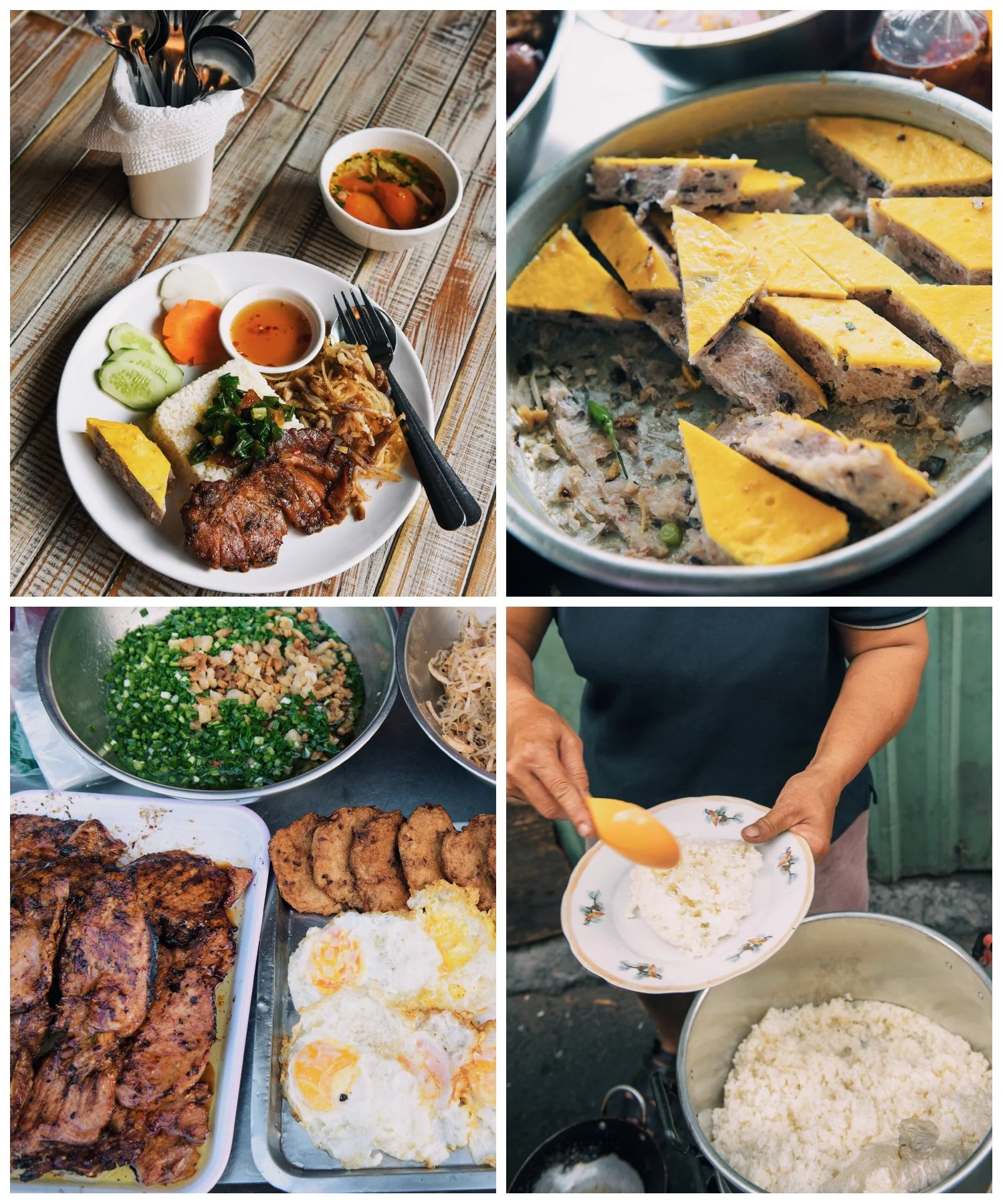
THE DISH – One of Ho Chi Minh City's defining dishes – a plate of fragrant, slightly chewy broken rice topped with grilled pork, pork skin, a fried egg or other accompaniments, then finished with sweet-savoury nước chấm. The rice grains are smaller and more irregular than ordinary steamed rice, giving the dish a distinctive texture. A classic plate is cơm tấm sườn bì chả – broken rice with grilled pork chop, shredded pork skin and steamed egg-and-pork cake.
THE STORY – The rice used is fragments created from milling. Once considered an inferior product, broken rice became an everyday food, particularly in southern Vietnam, where it was inexpensive and widely available. Over time, those humble grains became something celebrated.
The dish that evolved is quintessentially southern: generous, informal and built around grilled meats, pork, pickles, herbs and a sweet-salty fish-sauce dressing. In Saigon, cơm tấm moved from home kitchens and humble street stalls into one of the city's most recognisable meals.
IN HCMC – Cơm tấm is traditionally eaten for breakfast or lunch, although specialist restaurants and street stalls serve it through the day. You'll see pork chops being grilled over charcoal at the front of a shop, sending smoke and the smell of caramelising marinade into the street.
The classic combination is sườn bì chả: grilled pork chop, finely shredded pork skin mixed with roasted rice powder, and chả trứng – a savoury steamed egg-and-pork cake. You add a fried egg if you like, some pickled vegetables and plenty of nước chấm. Look out for:
Cơm tấm sườn – broken rice with a grilled pork chop; probably the classic Saigon version.
Cơm tấm sườn bì chả – the full trio of grilled pork, shredded pork skin and steamed egg-and-pork cake.
Bì – finely shredded pork skin mixed with roasted rice powder, giving it a slightly nutty, chewy texture.
Chả trứng / chả hấp – a steamed mixture of egg, pork and aromatics, usually sliced into wedges.
Cơm tấm bì – broken rice with shredded pork skin, often accompanied by grilled meat or other toppings.
Cơm tấm long Xuyên – a Mekong Delta variation associated with Long Xuyên, where the pork is typically sliced rather than served as the familiar grilled chop.
Cơm tấm đêm – late-night broken-rice stalls, a reminder that this is very much part of Saigon's everyday food culture.
WHERE TO EAT – Look for cơm tấm specialists where you can see the pork grilling over charcoal outside. Don't expect a delicate plate. A good cơm tấm meal is gloriously straightforward: rice, grilled meat, shredded pork, egg, pickles and a little bowl of nước chấm. Pour, dip or spoon the sauce over everything – there is no wrong way to do it.
9. Salads
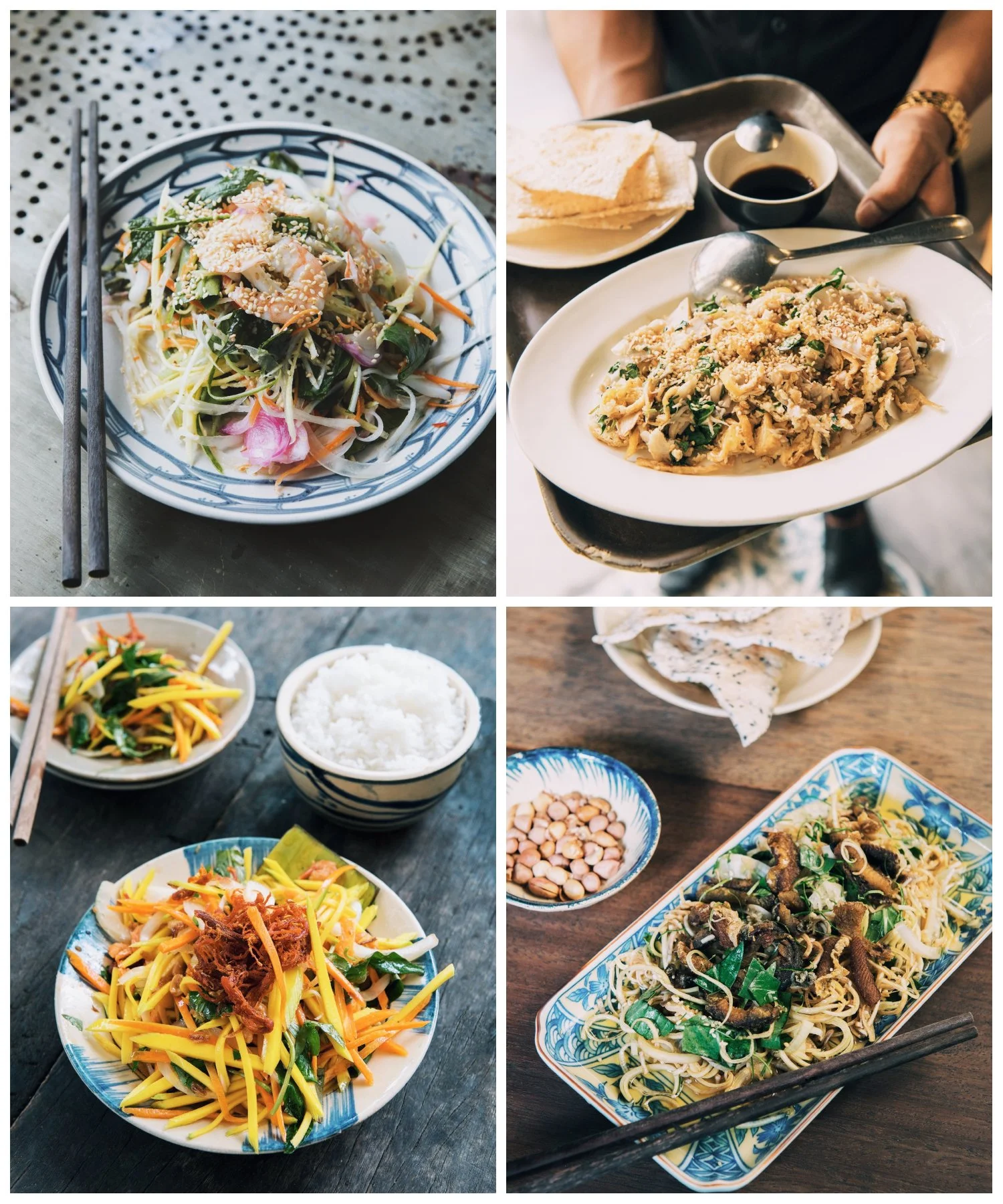
THE DISH – Vietnamese salads are exuberant combinations of herbs, vegetables, fruit, meat, seafood, peanuts, fried shallots and crunchy toppings, brought together with dressings that balance sweet, sour, salty and spicy flavours. They're all about contrast – crisp with soft, juicy with chewy, fresh herbs against savoury meat or seafood, all sharpened by a punchy dressing.
THE STORY – Vietnamese cooking has an extraordinary understanding of texture and contrast, and salads are one of its clearest expressions.
There's also a strong regional element. Southern Vietnam's tropical abundance gives cooks an extraordinary palette: green papaya, green mango, banana blossom, lotus stems, water spinach, herbs and countless other fruits and vegetables can all find their way into a salad. And because Vietnamese salads are generally lightly dressed, the ingredients retain their individual character. They're bright, fresh and deeply savoury at the same time.
IN HCMC – There isn't really one definitive Vietnamese salad – and that's precisely what makes the category so interesting.
Gỏi đu đủ combines crunchy green papaya with ingredients such as dried beef, herbs, peanuts and a sweet-sour dressing. Gỏi ngó sen uses crisp lotus stems, often with prawns or pork and plenty of herbs. Gỏi gà pairs shredded chicken with cabbage, herbs and sometimes banana blossom. Gỏi xoài brings green mango into the mix, its sour crunch working brilliantly with dried seafood, prawns or pork. Look out for:
Gỏi đu đủ – green papaya salad, often with dried beef, herbs, peanuts and a sweet-sour dressing.
Gỏi ngó sen – crisp lotus-stem salad, commonly paired with prawns, pork or chicken.
Gỏi gà – shredded chicken salad, often with cabbage, Vietnamese herbs and fried shallots.
Gỏi xoài – green mango salad, sometimes combined with dried shrimp, dried beef or seafood.
Gỏi bưởi – pomelo salad, where juicy citrus segments are combined with herbs, prawns or pork and a savoury-sweet dressing.
Gỏi bò – beef salad, often using rare beef with herbs, onions, peanuts and fried shallots.
WHERE TO EAT – This is a category worth exploring rather than hunting for one definitive dish. Look for gỏi on menus at Vietnamese restaurants, particularly places specialising in southern food.
10. Thịt kho trứng
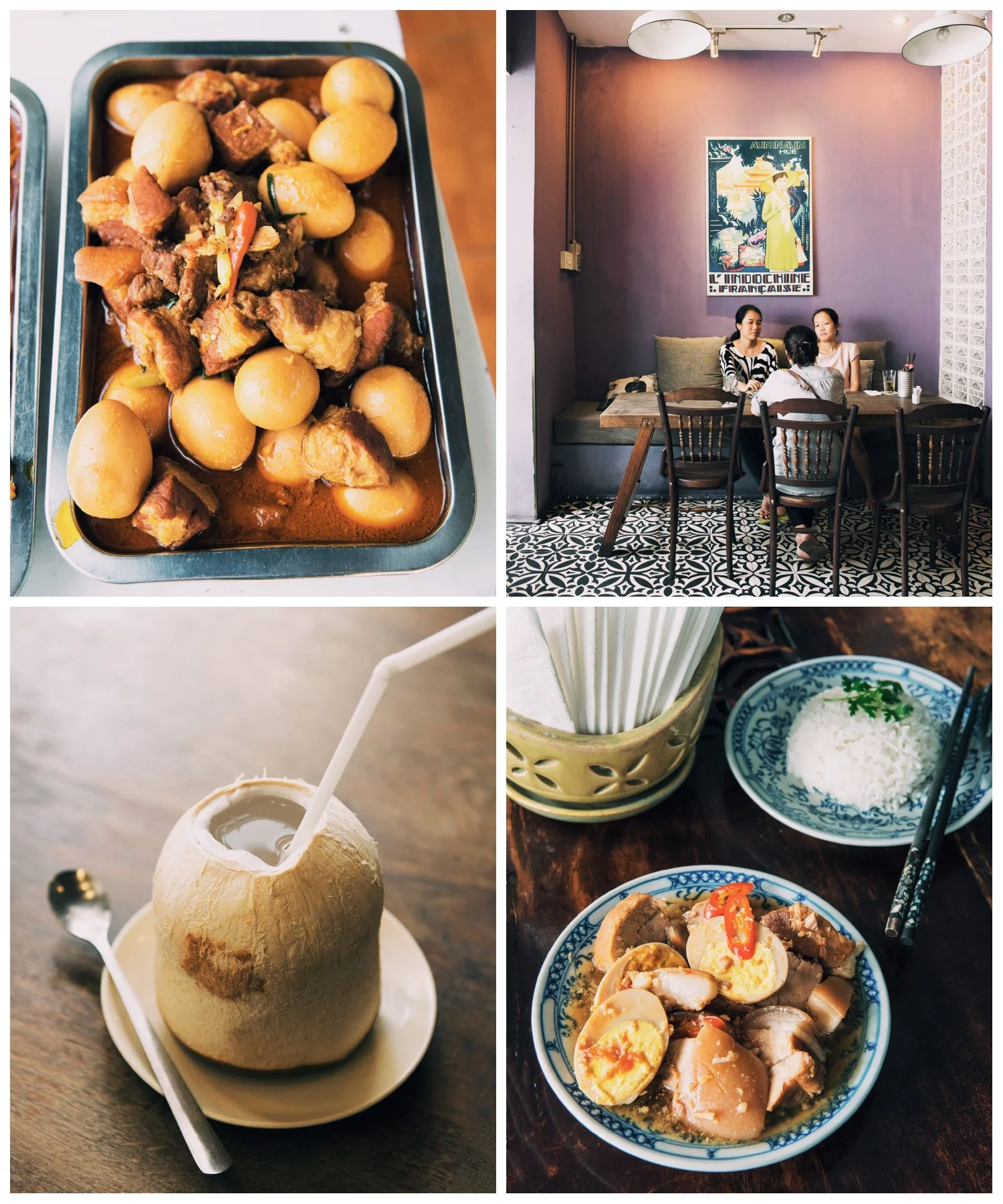
THE DISH – Chunks of pork and whole eggs slowly braised until the meat is meltingly tender and the eggs have absorbed the dark, savoury-sweet cooking liquid. The braising sauce is made with fish sauce, sugar and coconut water, often with aromatics such as shallots and black pepper. Best eaten with plenty of steamed rice to soak up the sauce, this is quintessentially Vietnamese home cooking.
THE STORY – Thịt kho trứng is strongly associated with southern Vietnam and is particularly important around Tết, when a big pot can sit at the centre of the family table for several days. But the dish is also part of a much bigger Vietnamese cooking tradition: kho – slow-braising meat, fish or seafood in a concentrated, savoury-sweet sauce.
One of the defining techniques is making nước màu, a dark caramel made by cooking sugar until it turns deep amber, then adding liquid. Fish sauce brings salt and umami; coconut water is often used in southern versions, adding a gentle sweetness. The result is a glossy, mahogany-coloured braising liquid that clings to the food and, crucially, seasons the rice alongside it. Once you understand kho, you'll start seeing it everywhere in southern Vietnam – for example cá kho tộ, fish braised in caramel and fish sauce in a clay pot, and gà kho gừng, chicken with ginger.
IN HCMC – This isn't really street food. It belongs to the domestic side of Vietnamese cooking – the food of family kitchens and everyday cơm rice meals. In HCMC you'll find it at cơm gia đình restaurants serving homestyle southern food, often alongside several other dishes chosen from a daily selection.
The pork should be soft enough to yield easily to chopsticks, while the eggs – usually hard-boiled before being added to the pot – become stained a deep caramel brown and soak up the braising liquid. Look out for:
Cá kho tộ – fish, often catfish, slowly braised in caramel, fish sauce and aromatics, traditionally served in a small clay pot. A southern classic and brilliant with steamed rice.
Gà kho gừng – chicken braised with ginger in a savoury-sweet caramel and fish-sauce sauce.
Thịt kho tiêu – pork braised with black pepper, fish sauce and caramel, usually without the eggs.
Tôm kho – prawns braised in the same sweet-savoury style, with regional variations in the seasonings and aromatics.
Cá kho – the broader family of braised fish dishes; kho describes the cooking method rather than one particular recipe.
Nước màu – the dark caramel sauce used in many southern kho dishes, made by caramelising sugar before adding liquid. Look for its deep mahogany colour and glossy finish.
WHERE TO EAT – Look for restaurants specialising in southern Vietnamese home cooking, or homestyle eateries where dishes are displayed or listed as part of a daily selection.
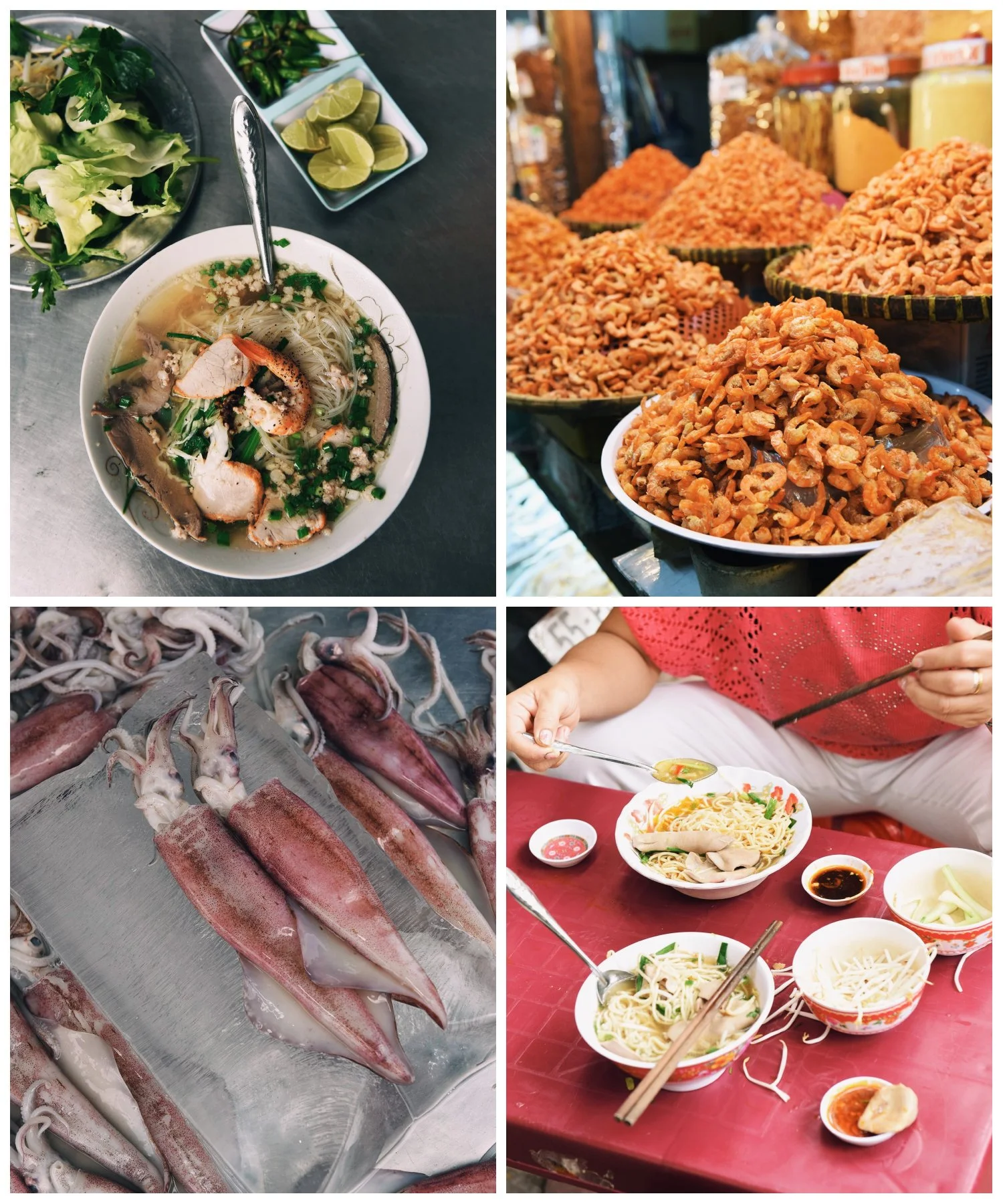
11. Hủ tiếu
THE DISH – If phở is Vietnam's best-known noodle soup, hủ tiếu is southern Vietnam's great noodle bowl. The noodles can be made from rice starch and vary considerably – from thin, slippery rice noodles to more translucent, chewy varieties. The broth is typically clear and deeply savoury, often built from pork bones with dried seafood, dried squid, prawns or other aromatics.
Toppings can include pork, prawns, squid, offal, quail eggs and Chinese-style roasted meats. And then there is hủ tiếu khô – the dry version, where the seasoned noodles and toppings arrive in one bowl and the clear broth is served separately.
THE STORY – Hủ tiếu tells one of the most interesting stories in southern Vietnamese food. Its development is closely connected to the movement and interaction of Vietnamese, Chinese and Cambodian communities in southern Vietnam, particularly in the Mekong Delta. Different versions evolved in different places, and the dish has never belonged neatly to one culinary tradition.
Hủ tiếu Mỹ Tho, from the Mekong Delta city of Mỹ Tho, is one of the best-known regional styles. Hủ tiếu Nam Vang is the Vietnamese name for a Phnom Penh-style bowl – Nam Vang being the Vietnamese name for Phnom Penh. So while hủ tiếu is now thoroughly embedded in Vietnamese food culture, its story is a reminder that southern Vietnamese cuisine has always been shaped by movement, trade and cultural exchange.
IN HCMC – HCMC is one of the best places to explore the sheer variety of hủ tiếu. It can be breakfast, lunch or late-night food, served at everything from tiny street stalls to specialist noodle shops.
The dry version is particularly worth trying. The noodles are tossed with seasonings and often a little sweet-savoury sauce, then piled with meat, seafood and vegetables, while a small bowl of clear broth comes alongside. It's a completely different experience from a bowl of noodle soup – and one of the great pleasures of eating your way around southern Vietnam is discovering which version you prefer.
WHERE TO EAT IT – Look for specialist hủ tiếu shops and, where possible, find out which regional style they serve. Don't assume every bowl will taste the same. The differences in noodles, broth, toppings and seasonings are part of what makes hủ tiếu so interesting – particularly in a city like HCMC, where southern Vietnam's many food traditions converge.
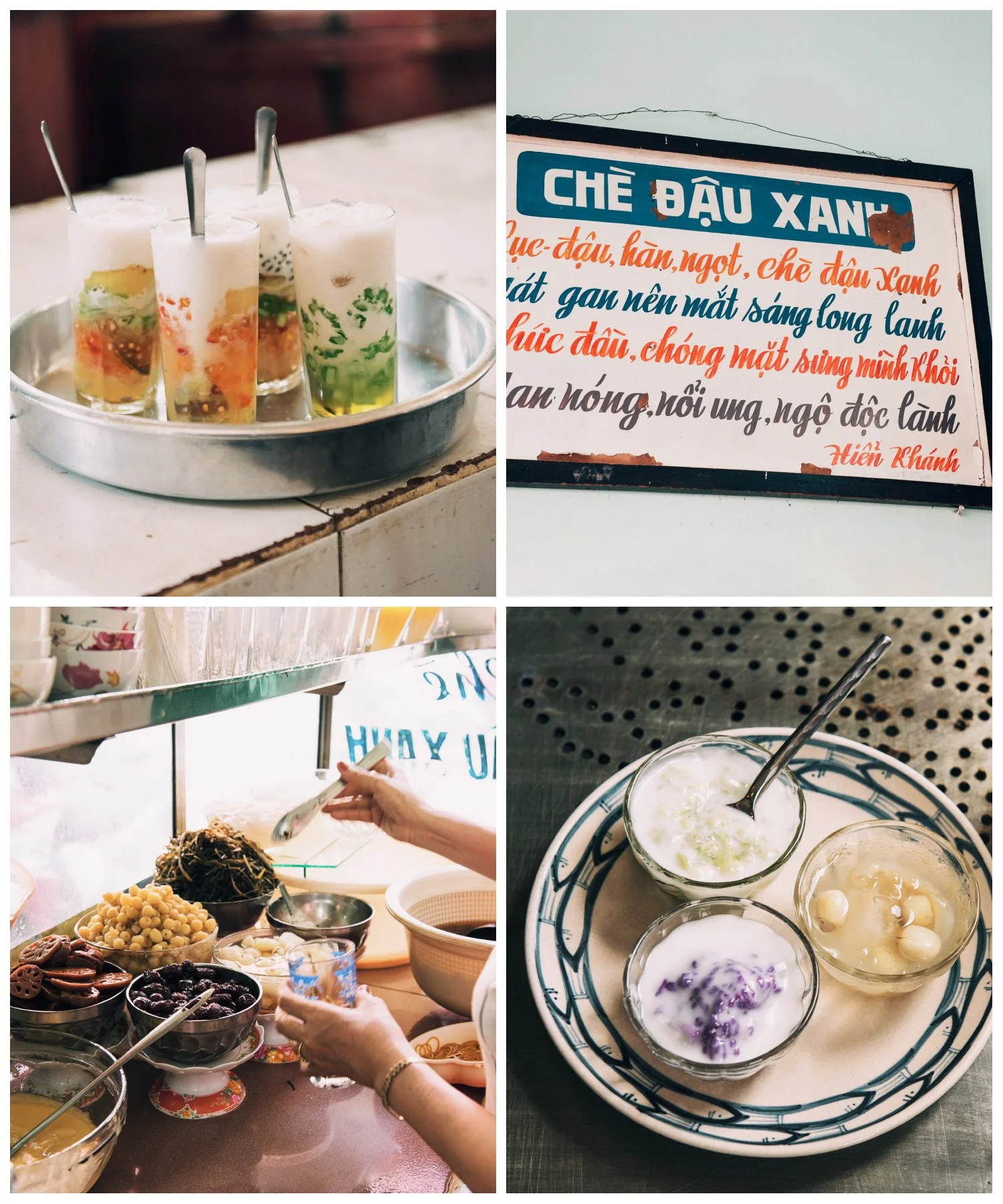
12. Chè
THE DISH – Chè is the great catch-all for Vietnamese sweet soups, puddings and drinks – if “dessert” is even the right word. It's an enormous family of sweets made from ingredients including beans, fruit, coconut milk, jellies, sticky rice, lotus seeds and tapioca. Some are served warm, others chilled or over crushed ice, and many combine several different textures in a single bowl.
There might be chewy tapioca pearls, slippery jellies, creamy coconut milk, soft beans and chunks of tropical fruit all happening at once.
THE STORY – Chè has deep roots in Vietnamese food culture and is a wonderful expression of the country's love of texture and contrast. Ingredients that might seem more at home in a savoury kitchen – mung beans, black beans, corn, taro and lotus seeds – become sweet and comforting when combined with coconut milk, sugar and fragrant pandan.
There are also countless regional and local variations, with some traditions influenced by Vietnam's Chinese communities. Chè is less a single dish than a whole world of Vietnamese sweets.
IN HCMC – Saigon's hot, humid climate makes cold chè particularly appealing.You'll find dedicated chè shops and street stalls offering bowls piled with colourful jellies, beans, fruit, coconut milk and crushed ice. Some are almost architectural in appearance; others are deliberately messy, with everything stirred together before eating.
Popular versions include chè ba màu – the famous three-colour chè made with layers of beans, jellies and coconut milk – and chè thái, a southern Vietnamese adaptation inspired by Thai-style sweet desserts, usually packed with tropical fruit, jellies and coconut milk. Don't overlook the warm versions, either. Chè đậu đen is a simple black-bean sweet soup, while chè made with lotus seeds or taro can be deeply soothing.
And chè isn't necessarily the grand finale to dinner. In HCMC it is just as likely to be an afternoon snack, an after-school treat or something grabbed from a street stall when the heat demands it. Look out for:
Chè ba màu – “three-colour chè”, usually layered with mung beans, red beans, jelly and coconut milk, then served over crushed ice.
Chè đậu đen – sweet black beans cooked with sugar and served warm or cold, often with coconut milk.
Chè đậu xanh – mung-bean chè, smooth and creamy, sometimes topped with coconut milk.
Chè bắp – sweet corn pudding made with glutinous rice and coconut milk; particularly associated with central and southern Vietnam.
Chè chuối – warm banana chè with coconut milk and tapioca pearls.
Chè khoai môn – taro chè, often rich with coconut milk and chewy tapioca.
Chè thái – a colourful HCMC favourite inspired by Thai desserts, with tropical fruit, jellies, coconut milk and crushed ice.
Sương sáo – grass jelly, usually served chilled with sweetened coconut milk or syrup.
Thạch – the broad family of jellies you'll encounter in many chè combinations, often made from agar or other plant-based setting agents.
WHERE TO EAT IT – Look for chè shops and street stalls, particularly in busy local neighbourhoods and areas with strong Vietnamese-Chinese food traditions. Don't simply choose by appearance – ask what's popular and let the person behind the counter point you towards something interesting.
And if you're faced with a dozen ingredients you've never encountered before, that's part of the fun. Chè is one of those Vietnamese food experiences where being able to identify everything in the bowl is entirely optional.
